Crash Cart About
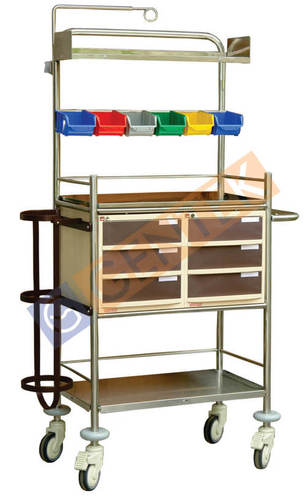
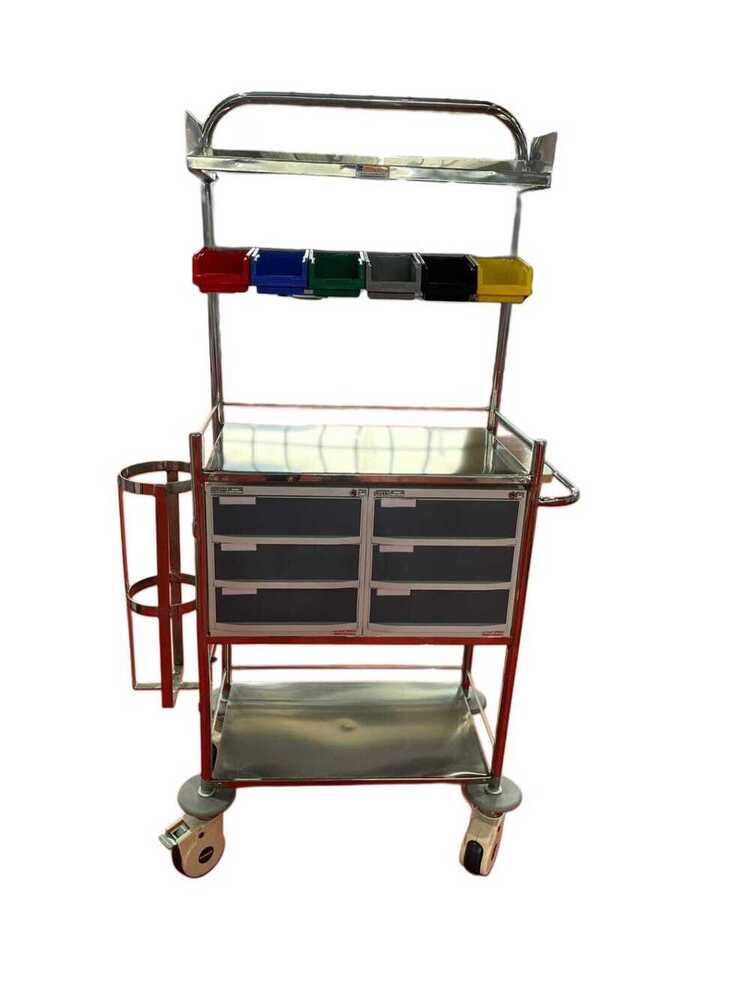
Any facility that treats patients who have the potential to have a sudden deterioration in their condition should have a crash cart available. State regulatory agencies require certain facilities to have a crash cart, but they are recommended for many more. This would include hospitals, outpatient surgery centers, urgent care centers, and all centers where conscious sedation is performed. Nursing homes who provide treatment for patients in cardiac arrest until EMS arrives would also have a need for a crash cart. Physician offices who perform certain diagnostic testing such as cardiac stress testing or stress echocardiogram also must have a crash cart available.Efficient Storage and OrganizationFeaturing a six-drawer modular system, this crash cart permits easy categorization and swift access to medical supplies. The multi-compartment design accommodates various emergency tools, ensuring staff can locate critical items rapidly during high-stress scenarios.
Mobility and Safety CombinedFitted with four heavy-duty swivel caster wheelstwo equipped with brakesplus ergonomic side handles and corner bumpers, this cart offers excellent maneuverability and stability. Its design prioritizes both safety and accessibility, allowing quick navigation through hospital corridors.
Hygienic and Durable ConstructionBuilt with stainless steel and finished with an electropolished coating, the crash cart stands up to frequent cleaning and harsh disinfectants. The ABS molded worktop and stainless accessory railing further enhance usability while supporting infection control protocols.
FAQs of Crash Cart:
Q: How does the crash cart facilitate quick access to emergency medical supplies?
A: The carts six removable modular drawers allow for careful organization and clear labeling of medical supplies, enabling medical staff to swiftly retrieve essential items during emergencies.
Q: What safety features are included in the crash cart design?
A: For enhanced safety, the cart includes a centralized locking system for the drawers, robust corner bumpers to protect from impact, and two out of four swivel caster wheels equipped with brakes to ensure stability during use.
Q: When should this crash cart be utilized within a hospital setting?
A: This crash cart is best employed in emergency rooms, intensive care units, and other critical care areas where rapid and organized supply access is vital for patient care during emergencies.
Q: Where is the oxygen cylinder held on the crash cart?
A: The crash cart features an integrated oxygen cylinder holder mounted on the side, providing secure and accessible storage for emergency oxygen delivery equipment.
Q: What is the process for maintaining and cleaning the crash cart?
A: The stainless steel construction and electropolished finish make the cart resistant to corrosion and easy to clean. Regular wiping with approved hospital-grade disinfectants is recommended to maintain hygiene and longevity.
Q: How is waste managed on the crash cart during medical procedures?
A: An attached waste bin allows for immediate disposal of used supplies and non-hazardous waste, keeping the work area tidy and efficient during emergency medical interventions.
Q: What are the key benefits of using this crash cart in healthcare facilities?
A: The crash cart provides organized storage, quick access to lifesaving equipment, enhanced mobility, and durable, easy-to-clean construction, all of which support efficient and safe emergency treatment delivery.







 Send Inquiry


 Send Inquiry
